
Football Matchday Equipment That Teams Need
Saturday morning usually tells you how well a team is organised before a ball is even kicked. If the nets are missing, the bibs are still wet in a boot bag, or nobody can find the pump, the warm-up starts badly and the rest of the day often follows. That is why football matchday equipment matters. For grassroots clubs, schools and community teams, having the right gear ready is not a bonus. It is part of turning up properly.
Matchday equipment is not only about what happens on the pitch. It affects preparation, player confidence, coaching standards and how smoothly the whole fixture runs. For a club secretary ordering for several teams, or a coach managing junior players on a cold Sunday, reliability matters just as much as price. The best setup is usually the one that covers the basics well, lasts through the season and is easy to top up when something goes missing.
What counts as football matchday equipment?
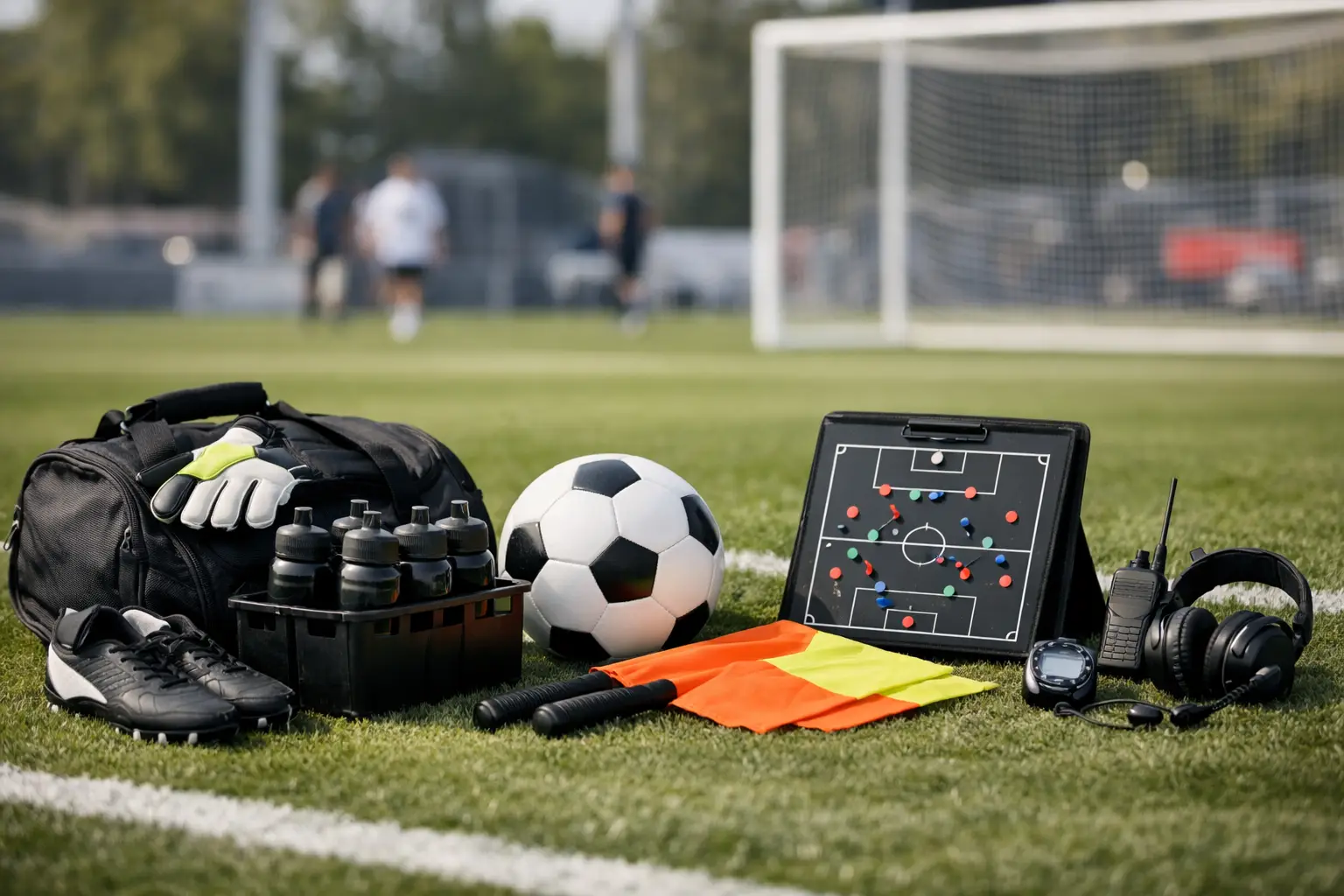
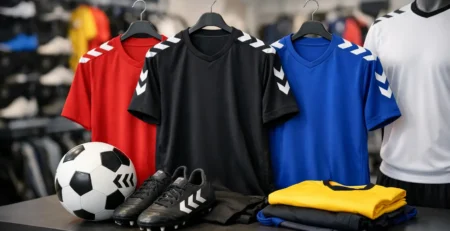
Football matchday equipment covers the practical items a team, coach or club needs to get through a fixture without hassle. That starts with the obvious essentials such as balls, pumps, bibs, cones, nets and water bottles, but it also includes the smaller items that tend to get forgotten until they are urgently needed. Captain’s armbands, first aid supplies, ball bags, tactics boards, corner poles and kit bags all fall into the same category because they support the day from arrival to full time.
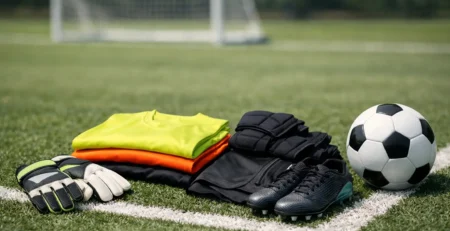
For some clubs, the category goes wider still. Referee accessories, pennants, team benches, goalkeeper gloves, spare socks and weather-ready layers can all sit under the same matchday umbrella. The exact list depends on whether you are running one junior side, a school football programme or a club with several age groups playing home and away every weekend.
The non-negotiables every team should have
Some items are simply not worth cutting back on. Match balls need to be match-ready, correctly inflated and suitable for the age group. A pump and needles should travel with them every time, because there is no value in quality balls if they are flat by kick-off. Bibs are another basic that matter more than people think, especially when numbers are mixed up in the warm-up or substitutes need to stay clearly identifiable.
Cones and markers help coaches set up quickly and keep pre-match routines structured. Nets and pegs are just as important for clubs responsible for pitch setup. If they are old, torn or mismatched, they create delays and make the whole venue look less organised. A proper ball bag and equipment bag can sound like a small detail, but they save time each week and stop gear getting scattered across cars, sheds and changing rooms.
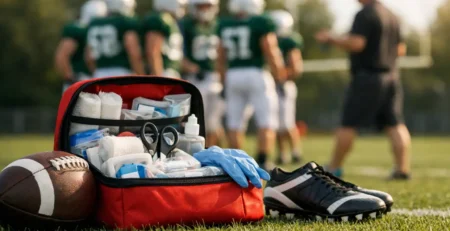
Then there is hydration and welfare. Water bottles, bottle carriers and a clear first aid kit should be standard for any side. At grassroots level, players, parents and staff notice when a team is well prepared. It reflects well on the club and makes the matchday environment calmer for everyone involved.
Football matchday equipment for coaches and managers
Coaches and managers often end up carrying more responsibility than equipment lists suggest. They need gear that helps them run the day efficiently, not just fulfil minimum requirements. A tactics board, stopwatch, notebook and spare bibs can make a real difference, especially when managing younger players or rotating larger squads.
It also helps to think in terms of backup. Spare socks, an extra goalkeeper jersey, replacement laces and a spare captain’s armband are the kind of items that do not get much attention until one goes missing ten minutes before kick-off. Good matchday prep is often about avoiding small problems before they become distractions.
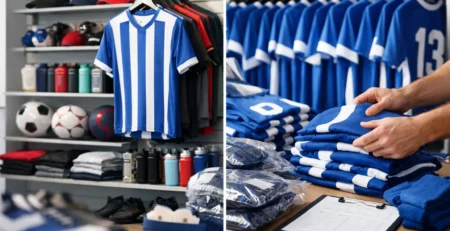
For clubs managing multiple sides, consistency matters. If every team uses a similar setup, it becomes easier to reorder, replace and check stock across the season. That matters even more when volunteers are handling equipment handovers from one age group to another.
Buying for one team is different from buying for a club
A single team can often get by with a compact, well-chosen kit of essentials. A club with several squads needs a more organised approach. That means thinking about durability, storage, repeat ordering and whether products can be matched across age groups.
For example, buying the cheapest accessories may seem sensible in the short term, but clubs usually feel the cost later through breakages and constant replacement. On the other hand, not every item needs to be premium. It depends on how often it is used and who is using it. Match balls, pumps and nets generally justify better quality because they are central to every fixture. Training markers or basic carriers might be an area where value matters more.
Schools and academies often have another priority: simplicity. PE staff and sports departments need equipment that is easy to identify, easy to store and straightforward to reorder. When different members of staff are responsible across the week, a standardised matchday setup reduces confusion.
Quality, price and where trade-offs matter
Not all football matchday equipment needs to sit at the top end of the market, but cutting corners on everything rarely works. The right balance depends on frequency of use, age group and playing level. A junior community team may not need the same specification as an academy environment, yet both still need dependable basics.
Durability is often the smarter measure than ticket price. A stronger ball bag, a better pump or tougher set of nets can save repeated spend across a season. That said, if you are equipping several teams at once, budget still matters. In that situation, it makes sense to prioritise high-use items first and build out the extras afterwards.
Brand preference also plays a role. Established football suppliers tend to offer consistency in sizing, finish and replacement options, which helps clubs avoid guesswork. If you are topping up lost items mid-season, it is far easier when you already know the standard and fit of the products you are ordering.
Don’t overlook presentation on matchday
Grassroots football is practical by nature, but presentation still counts. Matching accessories, tidy bench areas and properly prepared pitches create a more professional environment. That matters for players, parents, opposition teams and club volunteers alike.
Small details help here. Referee pennants for tournaments or special fixtures, clean bottle carriers, coordinated kit bags and visible staff equipment all contribute to a stronger club image. Support your club does not only mean wearing the badge. It also means showing up in a way that reflects pride and preparation.
This becomes especially relevant for clubs with official merchandise, multiple squads and regular home fixtures. If supporters, players and staff all rely on one place to source gear, replacing or adding matchday items becomes much simpler. That is one reason specialist football retailers are often a better fit than general sports outlets.
How to choose football matchday equipment that lasts
The best buying decisions usually come from looking at the season as a whole rather than this weekend alone. Start with the equipment used every single match, then think about what tends to go missing, wear out or get borrowed and not returned. That quickly reveals where clubs should hold spare stock.
It is also worth checking whether items are suitable for the team using them. Junior football requires age-appropriate ball sizes and practical, manageable storage. Adult sides may need heavier-duty options because usage is tougher and expectations are different. Goalkeeper equipment is another area where fit and quality matter more than simply choosing the cheapest available option.
Where possible, keep ordering straightforward. Buying from a specialist source that covers kits, training wear, accessories and club items in one place saves time and reduces the chances of mismatch. For busy team managers and club volunteers, convenience is not a luxury. It is part of staying organised through a long season.
Football Stuff serves exactly that kind of buyer, with football-specific gear for clubs, schools and community teams that need reliable supply rather than guesswork.
A better setup makes every fixture easier
No team wins because it has a new pump or a fresh set of cones, but poor preparation can absolutely make a fixture harder than it needs to be. Good football matchday equipment supports routines, cuts stress and helps clubs present themselves properly week after week.
If you are ordering for a team, think beyond the obvious starting eleven items. Consider the sideline, the warm-up, the bench, the referee, the goalkeeper and the post-match pack-away. When the equipment is right, coaches can coach, players can focus and the day runs as it should. That is usually the difference between scrambling on the touchline and being ready for football.
Share this post
Author





Leave a Reply