

Football Tracksuits for Clubs That Last
Cold Tuesday training, early Sunday kick-offs, away travel in winter – this is where football tracksuits for clubs earn their place. They are not just an extra layer. For grassroots teams, schools and academies, the right tracksuit helps players warm up properly, stay presentable on matchday and represent the club consistently across the season.
A good club tracksuit has to do more than look smart in a team photo. It needs to cope with repeated washing, changing weather, mixed age groups and the reality that one squad order often turns into top-ups a few weeks later. That is why buying tracksuits for a team is less about picking a nice design and more about choosing a practical setup that works for players, coaches and whoever is handling the order.
What clubs need from football tracksuits
Most clubs are buying for more than one use. A tracksuit might be worn to training, on the touchline, while travelling to fixtures and during pre-match warm-ups. That means comfort matters, but so do durability and consistency. If the fabric loses shape quickly or the colour fades after a few washes, the team soon starts to look mismatched.
Fit is another key point. Junior sections often need a wide size spread, while adult teams may want a closer, more athletic cut. There is no single answer here. Some squads prefer a slimmer training fit, especially for warm-ups and travel, while others need a roomier shape that layers easily over base layers and training kit in colder months.
Clubs also need tracksuits that are easy to reorder. This is often overlooked at the start. A team places one large order, then halfway through the season a new signing arrives, a player loses a top, or a parent asks for an extra jacket. If the chosen range is already changing or sizes are hard to source, a simple replacement becomes a hassle.
Choosing football tracksuits for clubs by use
The best buying decision usually starts with how the tracksuit will actually be used. If it is mainly for training nights, breathability and ease of movement matter most. Players are active, the session may start cold and finish warm, and nobody wants heavy outerwear getting in the way.
If the tracksuit is more of a travel and presentation piece, appearance and comfort become more important. A clean, coordinated look helps clubs present themselves well when arriving at fixtures, attending tournaments or taking part in community events. For academies and school teams especially, that consistency can make a real difference.
For managers and coaches, the balance is slightly different again. Staff often spend longer standing in poor weather, so they may want a warmer layer or a more relaxed fit. Ordering the same range across players and staff keeps the club identity strong, but it is worth checking whether the range works equally well for both.
Training performance versus presentation
Some clubs try to find one tracksuit that does everything. Sometimes that works. Sometimes it leads to compromise. A lightweight training suit may be ideal for movement but feel too minimal for winter touchline use. A heavier presentation tracksuit may look sharp but be less suited to intense sessions.
This is where budget and priorities come in. If the club wants one all-round option, choose a range that sits in the middle – comfortable enough for regular wear, smart enough for travel, and durable enough for weekly use. If the budget allows, some clubs separate training wear from sideline and travel kit, but that is not always realistic at grassroots level.
Fabric, fit and finish matter more than branding alone
Recognised teamwear brands give clubs confidence, but the badge on the label should not be the only deciding factor. Fabrics vary, as do cuts, zip quality, cuff design and how well the tracksuit holds up after repeated washing. Two ranges can look similar online and perform very differently over a full season.
Polyester blends remain the most common choice because they are durable, easy to care for and suited to regular team use. The better options feel smooth without being flimsy and keep their shape well. Tapered trousers are popular because they give a modern football fit, but not every player likes them. Younger players in particular may need something easier to get on and off over boots.
Small finishing details also count. Zip pockets are useful for travel and after training. Ankle zips can make changing simpler. Elasticated cuffs help with fit, but some players prefer open hems. These are not glamorous details, yet they are exactly the kind that affect whether a tracksuit gets worn every week or left in a kit bag.
Sizing across squads and age groups
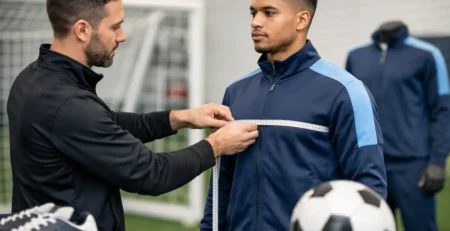
One of the biggest challenges for club orders is getting the size run right. Junior clubs are often ordering across several teams, and age labels rarely tell the full story. One under-12 squad can include players with very different builds. Adult teams are no different, especially when trying to fit players, coaches and volunteers in one order.
Where possible, think beyond the average size split. It is safer to allow for a few extra items at either end of the range than to order too tightly and create exchanges straight away. This matters even more with customisation, because personalised garments are not always easy to swap.
Fit preferences also vary by role. Players often want a neater fit. Coaches and parents buying supporter-style teamwear may prefer a bit more room. If the tracksuit range runs particularly slim or relaxed, that should shape the ordering plan from the start.
Club identity and customisation
Tracksuits do a lot of work for club identity. When the whole squad arrives in matching colours with club branding, it looks organised and professional. That matters to players, but it also matters to parents, supporters and sponsors. It shows that the club is set up properly.
Customisation can make a standard teamwear range feel specific to your club. Embroidered badges, printed initials, sponsor logos and staff roles all help separate a proper club order from a generic purchase. The key is keeping it clear and consistent. Too many variations can make repeat ordering harder and create a muddled look across squads.
For that reason, clubs are usually better off agreeing a simple customisation plan before anyone starts ordering. Decide where the badge goes, whether initials are included, and which teams or staff groups need sponsor branding. Once that structure is set, future top-ups become much easier to manage.
Budget, value and repeat ordering
Price always matters at grassroots level, but the cheapest option is not always the best value. If a tracksuit needs replacing early, shrinks after washing or cannot be topped up later, the original saving disappears quickly. A better approach is to look at cost over the season rather than cost on the day of purchase.
That includes the practical cost of admin. Club volunteers and team managers already have enough to handle. Chasing multiple suppliers, trying to match old stock or collecting individual payments can turn a straightforward order into a long job. A simple supply route saves time as well as money.
This is where a proper club-shop approach can help. Instead of treating each purchase as a separate task, clubs can keep teamwear organised in one place, making it easier for players, parents and staff to buy the right items when needed. Football Stuff is built around that kind of repeat ordering, which suits clubs that need more than a one-off teamwear deal.
Common mistakes clubs make
The most common mistake is buying on appearance alone. A sharp-looking tracksuit may still be the wrong option if it runs too slim, lacks stock continuity or does not suit the way the squad trains.
Another issue is underestimating reorders. Very few clubs get through a full season without needing extras. Planning for top-ups from the start is one of the easiest ways to avoid problems later.
Some clubs also make the order too complicated. Different logos, too many initials, mixed styles across age groups and unclear sizing choices all add friction. Keeping the setup simple usually delivers a better result for both presentation and day-to-day use.
Getting the order right first time
The strongest club orders usually come from a few clear decisions made early. Choose a tracksuit range that suits the main use, check that the fit works across the age groups involved, and keep branding consistent. Then think about the practical side – washing, weather, replacement items and how easily people can order again.
For most grassroots clubs, the best football tracksuits for clubs are the ones that players actually want to wear, that parents can wash without fuss and that managers can reorder without starting from scratch. That may sound simple, but getting those basics right is what keeps the whole club looking ready from August through to the run-in.
If your teamwear needs to work on the training pitch, on the bus and on the touchline, choose tracksuits that support the club beyond the first order.
Share this post
Author






Leave a Reply