
Choosing First Aid Kits for Football Teams
A player goes down in the first ten minutes, a knee is grazed on the pitch edge, and suddenly everyone is asking the same question – where’s the kit? That moment is exactly why first aid kits for football teams need proper thought behind them. Not just a box ticked at the start of the season, but a practical part of how a team trains, plays and stays prepared.
For grassroots clubs, schools and junior sides, first aid is rarely about dramatic emergencies. More often, it is about dealing quickly with cuts, knocks, strains and the small injuries that can disrupt a session if you are not ready. The right kit helps coaches and staff respond calmly, keep players safe and get the day back on track.
Why first aid kits for football teams need to be football-specific
A generic workplace first aid box is better than nothing, but it is not always set up for football. Matches and training sessions create a different pattern of injuries. You are dealing with contact, slips, studs, hard ground in summer, wet surfaces in winter and repeated knocks across a squad rather than one individual.
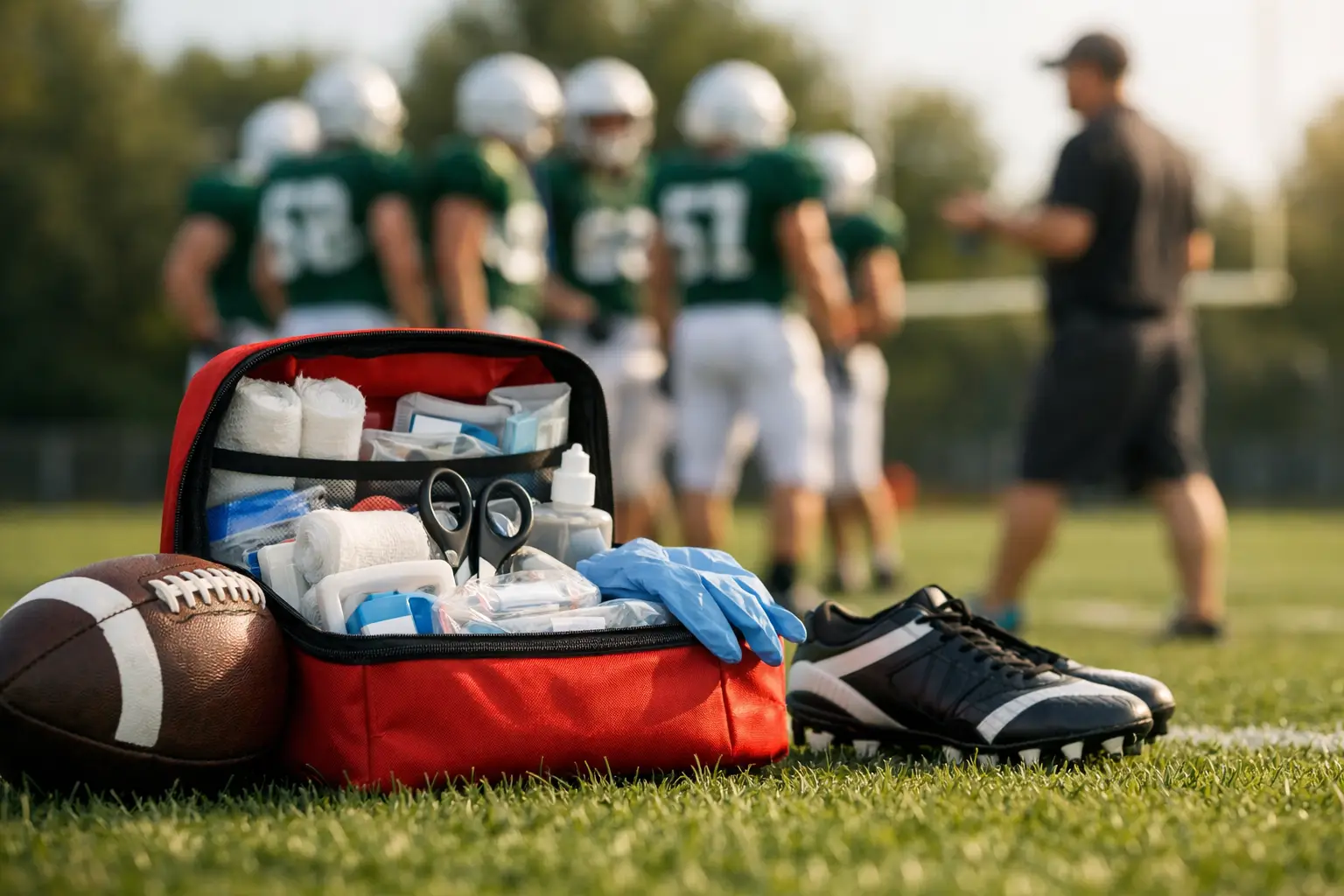
That means a football team first aid kit needs to be portable, easy to open quickly and stocked for common pitchside problems. Dressings, bandages, sterile wipes and ice packs matter more than items you are less likely to use outdoors on a touchline. It also needs to cope with volume. One player with a cut is manageable. Two or three players needing treatment during a busy session is a more realistic test.
There is also the practical side. A kit for football should travel easily between training and matchday, fit in with other equipment and be easy for coaches or team managers to check at a glance. If supplies are buried in a cluttered bag, it slows everything down when time matters.
What should be in first aid kits for football teams?
The best approach is to think in terms of likely use rather than buying the biggest box available. A team kit should cover routine treatment for minor injuries and support safe initial response until further help is available if needed.
For most grassroots football settings, that means plasters in assorted sizes, sterile dressings, adhesive tape, conforming bandages, triangular bandages, sterile saline or cleansing wipes, disposable gloves and instant cold packs. Scissors, a foil blanket and resuscitation face shield are also sensible additions. If the kit is for junior football or school use, having enough stock for several players at once is especially useful because younger age groups tend to need more regular minor treatment.
Some clubs also choose to carry items aimed at soft tissue support, such as cohesive bandage or compression wraps. That can be useful, but only where the person applying them is confident and acting within the club’s guidance and training. More is not always better. Stock should match the level of knowledge of the adults using the kit.
What you should not do is rely on half-used leftovers from previous seasons. Expired wipes, crushed dressings and missing gloves are common signs of a kit that exists on paper rather than in practice.
Matchday kit versus training kit
It often makes sense to separate the two. A compact training kit may be fine for twice-weekly sessions, especially if attendance is lower and you are close to school or clubhouse facilities. Matchday is different. More players, more contact and the pressure of an organised fixture usually justify a fuller kit.
This is where clubs sometimes get caught out. They buy one first aid bag for the whole team, then realise it is in the wrong boot, with the other coach or left at the previous venue. If your squad plays regularly across different sites, duplicate kits can be more practical than a single larger one.
How to choose the right size for your squad
Squad size matters, but so does format. An adult Sunday side with one weekly fixture has different needs from a school football department running multiple teams across several age groups. The same applies to academies or larger community clubs where equipment moves between coaches.
For a single team, a mid-sized portable kit is usually the most sensible option. It gives enough room for regular-use supplies without becoming bulky. For clubs running several squads, a better setup is often one central restock supply plus individual pitchside kits for each team.
Think about your actual football calendar. If you train twice a week and play at weekends, your stock will move faster than you expect. Add pre-season tournaments or six-a-side festivals and usage increases again. Buying for the badge on the front of the bag is less useful than buying for the number of sessions you need to cover.
Junior teams need extra thought
For youth football, preparation matters even more. Minor cuts, nosebleeds, grazes and bumps are common, and sessions can unravel quickly if coaches are hunting around for basic supplies. Junior settings also tend to involve more adults helping out, so a clearly organised kit with labelled sections is a real advantage.
Parents notice this as well. A club that looks prepared builds trust. It shows that player welfare is being taken seriously, not treated as an afterthought.
Features worth looking for in a football first aid bag
The contents are the main thing, but the bag itself does a lot of work. A hard-to-carry or badly organised bag becomes a problem over a season.
Look for a design that is easy to grab and transport with other matchday gear. Strong zip access, internal compartments and clear storage sections make a difference when you need something quickly. Water-resistant material is also worth having, especially through the British winter when bags end up on wet grass, muddy paths and damp dugout floors.
A visible first aid marking helps too. That may sound obvious, but on a busy touchline with kit bags, footballs and bibs scattered around, clear identification saves time. If you are equipping several age groups or coaches, consistency helps. Everyone knows what the bag looks like and where key items are kept.
Common mistakes clubs make
The biggest mistake is assuming someone else has checked the kit. In many grassroots setups, responsibility becomes blurred between manager, coach, secretary and parent volunteer. The result is a kit that appears at the first game of the season and is then ignored until something runs out.
Another common issue is understocking gloves, dressings and cold packs. These are often the first items used and the least likely to be replaced promptly. Clubs also sometimes buy kits that are too generic, loaded with items that are less relevant while missing enough of the basics needed on a football pitch.
Storage can be a problem as well. Leaving kits in a car boot for long periods, especially through heat or frost, is not ideal for condition and shelf life. Keeping the kit clean, dry and regularly checked is part of making it useful.
Keeping your first aid kit ready all season
A good first aid kit is not a one-off purchase. It needs simple routine management. The easiest system is to assign one named person per team to inspect it monthly and after every fixture where supplies have been used. That check does not need to take long. You are looking for missing consumables, damaged packaging and items approaching expiry.
It also helps to keep a short restock list inside the bag. That way, if a dressing or cold pack is used, the replacement is noted immediately rather than remembered three weeks later. For schools and larger clubs, centralising spare stock can save time and avoid each coach ordering small items separately.
This is where buying from a specialist football supplier can make life easier. If you are already sourcing matchday equipment, training accessories and squad essentials in one place, it is simpler to keep practical items like first aid support on the same checklist.
It is not just about compliance
Some teams only think about first aid when a league rule, school policy or venue requirement mentions it. That is understandable, but it misses the point. A well-stocked first aid kit is not there to satisfy paperwork. It supports players, protects staff decision-making and keeps sessions moving with less disruption.
It also reflects how organised a club is overall. The teams that prepare properly for injuries tend to prepare properly in other areas too – kit, cones, balls, bibs, water and matchday admin. It is part of running football well.
If you are choosing first aid kits for football teams, keep it practical. Buy for the reality of your sessions, not the ideal version on paper. Make sure the bag is easy to carry, the stock fits the level you are working at and someone is responsible for keeping it ready. When the next knock, cut or collision happens, that bit of planning will feel less like admin and more like common sense.
Share this post
Author






Leave a Reply