
How to Size Football Tracksuits Properly
One player in a tight jacket and another swimming in training bottoms is usually a sign that nobody stopped to check sizing properly. If you are working out how to size football tracksuits for a team, school squad or your own player, getting it right first time saves hassle, avoids delayed kit handouts and helps everyone train comfortably.
Tracksuits need to do more than just look smart on arrival. They have to cope with warm-ups, travel, wet evenings, washing cycles and the usual stop-start of grassroots football. That means sizing is not just about what fits in the changing room for thirty seconds. It is about what still works over a full season.
How to size football tracksuits without guesswork
The easiest mistake is treating tracksuits like casual clothes. Football tracksuits are built for movement, layering and regular use, so the best fit is usually a practical one rather than the closest possible fit.
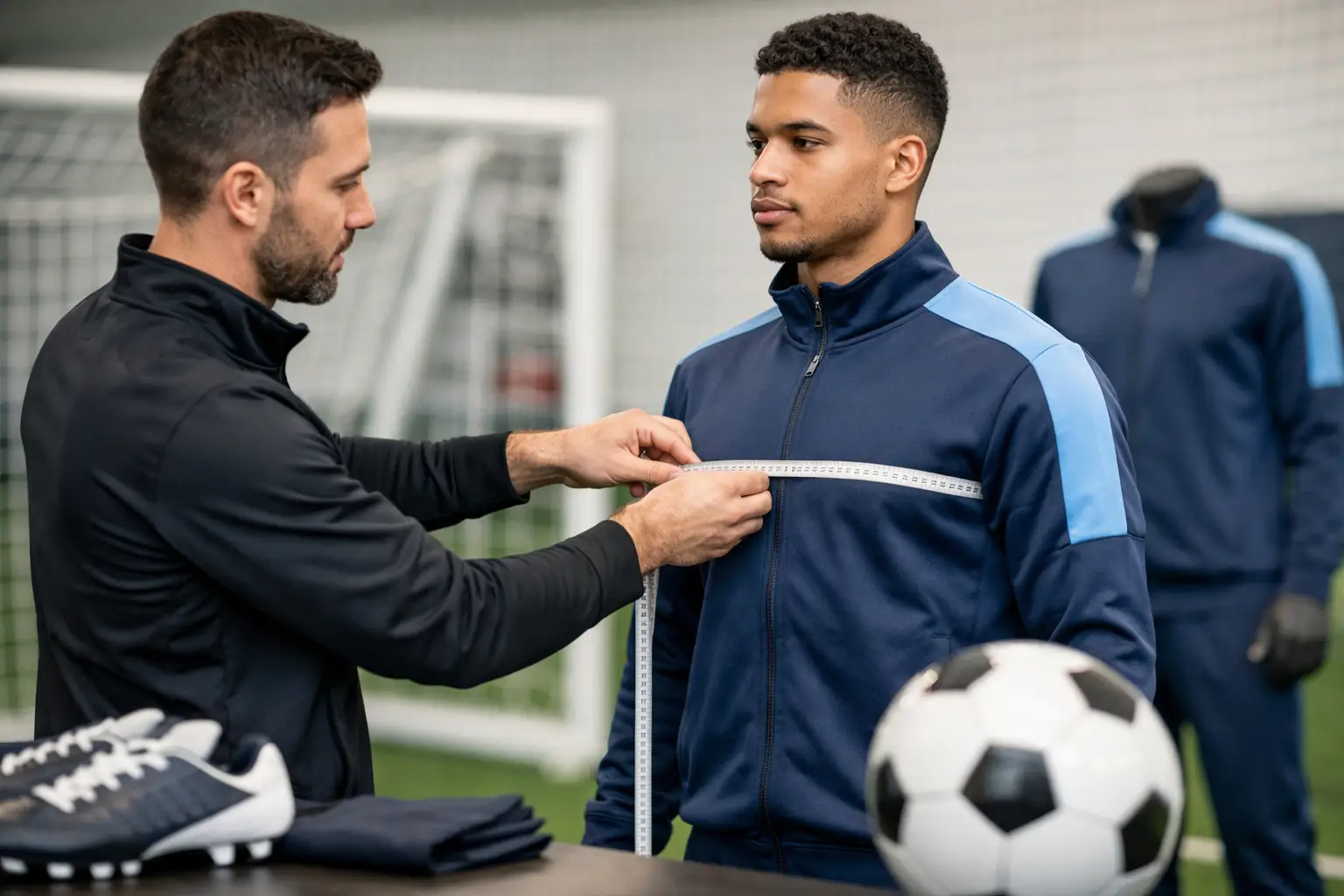
Start with three measurements – chest, waist and height. For adults, chest and waist usually give you the clearest starting point. For children, height is often just as important because junior teamwear is commonly grouped by age or stature bands, and two players of the same age can fit very differently.
If the player is between sizes, the right choice depends on use. A slim training fit can work for older players who prefer a closer feel, but junior players, growing teenagers and squad orders are usually better with a little room. Extra space is useful for base layers, rain jackets and winter sessions when players are not training in mild weather.
Brand differences matter as well. One manufacturer may offer a neater athletic cut, while another gives a more generous fit through the body or leg. That is why relying on a player saying “I am always a medium” can cause problems. In football teamwear, medium in one range is not always medium in another.
What to measure before you order
A tape measure does more for sizing accuracy than guessing off school uniform or everyday joggers. Measure over light clothing and keep the tape snug, not tight.
For the jacket top, the chest is the key measurement. Measure around the fullest part of the chest with the arms relaxed. If the player will regularly wear a thermal top or training layer underneath, allow for that. Tracksuit tops should sit cleanly across the shoulders and zip up without pulling.
For the bottoms, measure the waist where the garment will actually sit. Some players wear tracksuit bottoms higher, others lower, and elasticated waists can hide a bad size at first. The issue usually shows up in movement – bottoms slipping, clinging at the thigh or sitting too short at the ankle.
Height helps with overall proportion, especially in junior sizes. A child may fit the waist in one age band but need the next size up for sleeve or leg length. In those cases, height often decides the better option.
If you are ordering for a whole squad, ask for actual measurements rather than ages alone. Age-based estimates are quick, but they create avoidable returns and exchanges, particularly in under-13s to under-16s where players develop at very different rates.
Getting the right fit for juniors
Junior football tracksuits are where most sizing errors happen. Parents often buy with growth in mind, while coaches want players to look uniform and feel ready to train. Both concerns are fair, but going too far either way usually backfires.
A tracksuit that is far too big can affect movement, especially in colder sessions when players are already wearing extra layers. Sleeves bunch up, cuffs hang over hands and bottoms drag or catch on boots. That is not practical for warm-ups or travelling to fixtures.
On the other hand, buying a tracksuit to fit only for this month is not ideal if the player is mid-growth spurt. A good junior fit gives some room through the body and leg without looking oversized. The jacket should allow free arm movement, and the bottoms should stay clear of the ground while still reaching the ankle.
For academy, school and club orders, it often helps to check sample garments on a few players across the age group before placing a large order. That gives a more realistic view than age labels alone and can reduce problems when kit is distributed across the squad.
Adult sizing is simpler, but not always straightforward
Adult players are usually more consistent in size, but fit preference varies a lot. Some want a close, modern cut for training. Others need room for coaching layers, travel wear or wider builds through the thigh and shoulder.
A good adult tracksuit fit should feel easy in motion. Players should be able to jog, stretch and sit on the bench without the jacket pulling across the back or the bottoms tightening at the knee. If the fit feels right when standing still but restrictive when moving, it is probably too small.
For managers, coaches and staff kit, comfort often matters more than a narrow athletic fit. Staff are wearing tracksuits for setup, coaching, travelling and standing outside in poor weather. A little extra room is usually more useful than a very fitted look.
How football tracksuits should fit in real use
The best way to judge sizing is to think about where and how the tracksuit will actually be worn. Pre-match travel, warm-ups, recovery sessions and winter training all place slightly different demands on fit.
A jacket should zip comfortably, sit neatly at the shoulder and allow the player to move their arms freely. If the hem rides up when the arms are raised, or the zip strains over the chest, size up. If the sleeves cover the hands completely or the body hangs too far below the waist, it is probably too big.
Bottoms should stay in place without needing constant adjustment. Tapered styles can feel smart and modern, but they need enough room through the calf and ankle to pull on and off easily, especially over socks or boots if the design allows. If a player struggles getting them on quickly before training, the fit may be too tight even if it looks fine once worn.
Fabric also plays a part. Some tracksuits have more structure and less give, while others feel softer and more forgiving. Structured fabrics can look sharper for team presentation, but they are less forgiving if you choose a size that is too small.
Sizing for team orders and club shops
When you are ordering for multiple players, consistency matters almost as much as fit. One-off guesses become a bigger issue when twenty or thirty tracksuits arrive and several need swapping.
The most reliable approach is to collect measurements in a simple format before ordering. Chest, waist, height and preferred fit are usually enough to make strong choices. It also helps to separate players into junior and adult sizing clearly, because crossover ages can cause confusion.
If personalisation is involved, accuracy becomes even more important. Printed initials, squad numbers or club branding can limit exchange options, so it is worth taking extra time at the sizing stage. For clubs, schools and academies, a proper size check before confirming the order usually saves more time than a rushed handout followed by corrections.
This is where a specialist football retailer can make the process easier, especially when you are coordinating teamwear across age groups, coaches and top-up orders later in the season. A structured approach keeps squads looking consistent and helps avoid repeat ordering mistakes.
Common sizing mistakes to avoid
The biggest mistake is buying only by age or usual clothing size. That might work for a casual hoodie, but football tracksuits vary too much by brand and fit.
Another common problem is sizing too tightly for winter use. Players often need room for layers, and what feels just right in a warm house can feel restrictive on a cold Tuesday night under floodlights.
It is also worth avoiding the temptation to size too far up “just to be safe”. Oversized tracksuits look untidy, wear awkwardly and can be frustrating for younger players. Safe sizing does not mean baggy sizing.
Finally, do not judge the fit on the jacket alone. A set needs to work as a set. Plenty of buyers focus on the top and forget that the bottoms often create the bigger issue in day-to-day use.
When to size up and when not to
There are times when sizing up makes sense. Junior players who are growing quickly, winter training use, and fitted brand cuts can all justify going up a size. It is also sensible when a player sits right at the top end of a size chart.
But sizing up is not automatic. If a player already has broad room in the body and full leg length, going larger can create more problems than it solves. The aim is not to buy the biggest wearable option. It is to choose the size that supports training, travel and repeat wear without getting in the way.
A football tracksuit should feel ready for work. Smart enough for team presentation, comfortable enough for movement, and durable enough for regular washing and weekend use. If you size with those jobs in mind, you are far more likely to get it right.
Take the extra few minutes to measure properly before you order. It is one of the simplest ways to keep players comfortable, keep teams looking sharp and keep your season moving without kit headaches.
Share this post
Author





Leave a Reply