
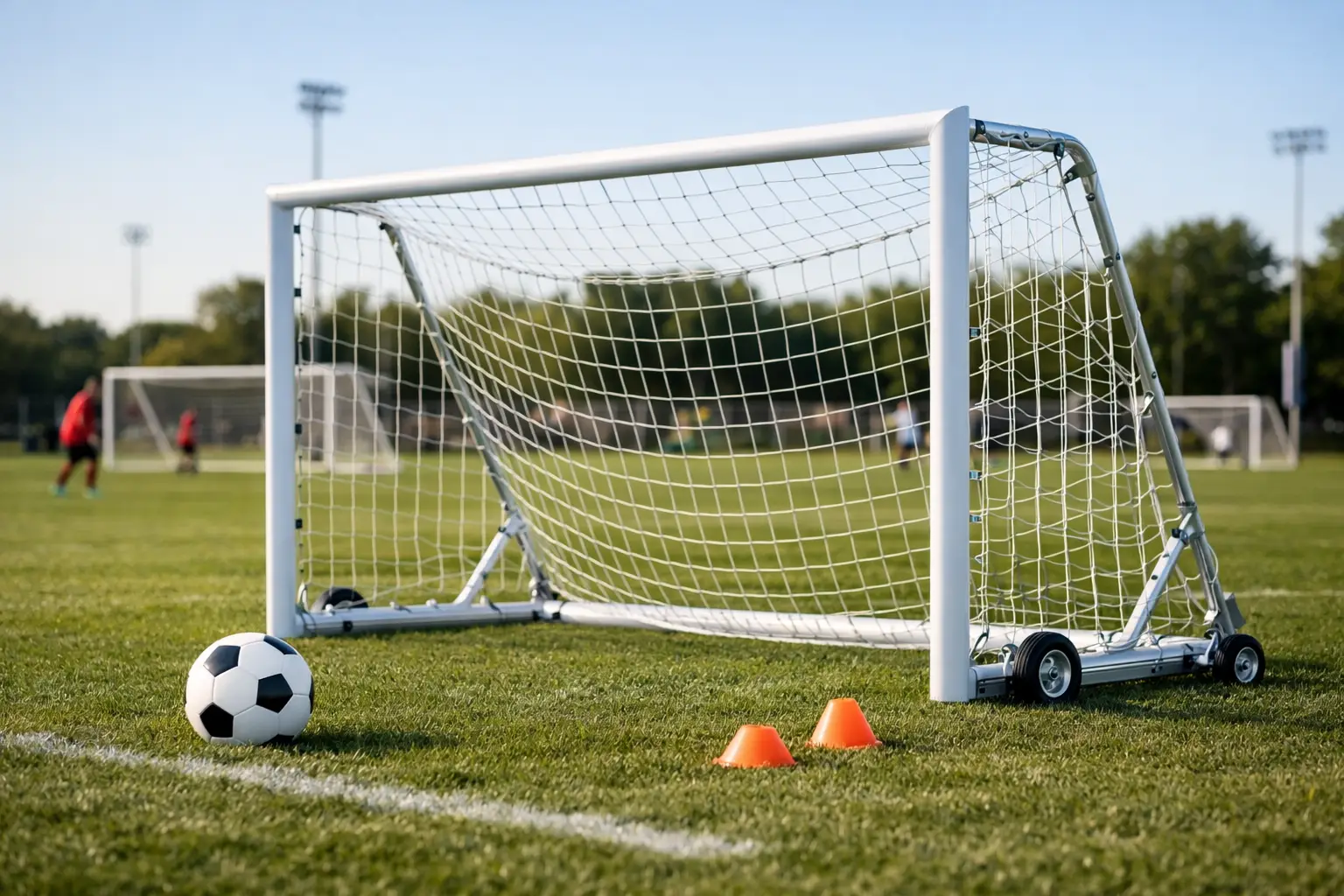
Portable Football Goals for Clubs That Last
A windy Tuesday session can tell you more about your equipment than a full season brochure ever will. If a goal shifts every time the ball hits the side netting, takes too long to move between drills, or starts showing wear after a few months on the training ground, it quickly becomes a problem for coaches, players and volunteers alike. That is why choosing the right portable football goals for clubs is less about ticking a box and more about making training easier to run week after week.
For grassroots clubs, schools and academies, portable goals need to do several jobs at once. They have to be safe, easy to move, durable enough for regular use and practical for the space available. Some clubs need a pair that can be set up quickly for small-sided games. Others need multiple goals to support age-group training across one busy evening. The best choice depends on who is using them, where they are being used and how often they need to be moved.
What clubs really need from portable football goals
At club level, convenience matters, but not at the expense of stability. A lightweight goal is useful if one coach or parent has to move it across a pitch before training starts. But if it is too light, it can become frustrating in use, especially on exposed grounds or harder surfaces. That balance between portability and strength is usually the first thing to get right.
Material plays a big part here. Steel goals tend to feel more solid and can cope well with repeated use, but they are heavier and may take more effort to reposition. Aluminium options are easier to handle and often better suited to clubs that regularly switch pitch layouts or share facilities. Neither is automatically better. If your team trains in one set area and only moves goals occasionally, extra weight may be a benefit. If your sessions involve lots of transitions and changing formats, easier handling is often worth more.
Net attachment and frame design also make a difference over time. A goal used three or four times a week by junior or adult teams will need components that stand up to regular assembly, dismantling and transport. Loose fittings, weak joints and poor net support create extra work that busy clubs do not need.
Choosing portable football goals for clubs by age group
Not every goal suits every squad. Junior football, academy sessions and adult training all place different demands on equipment, so buying one size and hoping it works across everything is rarely the most efficient route.
Mini football and small-sided training
For younger age groups, smaller portable goals are often the most practical option. They are easier to transport, quicker to set out and ideal for creating multiple practice areas in one session. This matters when coaches are trying to maximise touches, keep players active and avoid long waits between drills.
Smaller goals can also help clubs make better use of limited space. On compact training areas, being able to run two or three games side by side is often more valuable than using one larger goal that dominates the pitch.
Youth development and academy use
As players move up the age groups, clubs usually need goals that still move easily but offer a more realistic match feel. That often means stronger frames, better net depth and dimensions that support finishing, crossing and goalkeeper work properly. A youth coach may need to use the same goals for possession patterns on one night and shooting practice on the next, so flexibility matters.
Adult and mixed club use
For adult teams, durability becomes even more important. Shots are harder, use is heavier and wear tends to show faster. If the same set of goals is used across men’s, women’s and youth sessions, clubs should lean towards models built for repeated impact rather than the cheapest short-term option. Saving money upfront can lead to replacements sooner than expected.
Safety matters more than convenience
Portable goals only work for clubs if they are safe in daily use. This is especially important where junior teams, schools and community groups are involved. Stability is the obvious issue, but safety goes further than whether a goal stays upright during a drill.
Anchoring is essential. Even portable goals need proper securing in line with the surface and usage. On grass, that may mean suitable anchors or ground pegs. On harder surfaces, clubs may need weighted solutions designed for that environment. A goal that is easy to move but difficult to secure properly can create more risk than value.
Frame construction is worth checking closely too. Clubs should look for designs that reduce pinch points during folding or assembly, and for components that stay secure after repeated handling. If several coaches or volunteers use the same equipment, simple and reliable setup is a major advantage. The more complicated the system, the more chance of inconsistent use.
It is also worth thinking about who will move the goals. If a product is technically portable but realistically requires two strong adults every time, it may not suit a junior team managed by one coach and a parent helper.
Storage, transport and weekly use
One of the main reasons clubs choose portable goals is practicality. That only holds up if storage and transport are genuinely manageable.
Some clubs have secure containers beside the pitch. Others are sharing school facilities, council sites or hired 3G pitches where equipment has to be packed away after every session. In that situation, the shape of the goal when folded, the ease of stacking and the overall weight matter just as much as performance on the pitch.
A bulky model might look fine on paper, but if it takes up too much room in a storage unit already full of balls, bibs, poles and team kit, it soon becomes awkward. The same applies if coaches are loading equipment into a car before training. Portability should be judged in real club terms, not just by product description.
For clubs running multiple sessions in one evening, setup speed matters as well. If a coach spends fifteen minutes assembling goals before every session, that is training time lost. Over a season, those minutes add up.
Durability versus price
Budget always shapes club buying decisions. Grassroots football has to make every pound work, and equipment usually competes with kits, training wear, balls and other essentials. But with portable goals, the cheapest option is not always the best value.
Lower-cost goals can suit lighter use, occasional school sessions or seasonal community football. For regular club training, though, weak frames and lower-grade nets often show their limits quickly. Frequent movement, repeated impacts and rough storage conditions can shorten lifespan if build quality is not there.
That does not mean every club needs the top-end model. It means buying for actual use. A club training twice a week across several age groups should think in terms of cost per season, not just purchase price. Spending a bit more for stronger materials, better fittings and more dependable stability can reduce replacement costs and make weekly sessions run more smoothly.
Features worth paying for
Some features genuinely improve day-to-day use, while others are less important than they first appear. For most clubs, wheels or easy-lift designs are useful where goals need moving across longer distances. Quality net clips or attachment systems are worth having because they save time and reduce maintenance frustration. Weather-resistant finishes also matter, particularly for clubs storing equipment outdoors or in damp conditions.
By contrast, clubs should be careful about paying extra for features that do not match how the goals will actually be used. If the goals rarely leave one site, ultra-compact travel-focused design may be less useful than a sturdier frame. If they are mainly for junior training, oversized match-style appearance may matter less than quick handling and safe storage.
A practical buying approach for clubs
The strongest buying decisions usually come from asking a few plain questions. How many sessions a week will the goals be used for? Who will move and set them up? What age groups need them? Are they going on grass, 3G or hard courts? Where will they be stored between sessions?
Once those answers are clear, the right specification becomes easier to spot. Clubs that need flexible training layouts should prioritise manageable weight and quick setup. Clubs focused on repeat use by older age groups should move durability higher up the list. Schools and community settings may need the safest and simplest assembly possible because different staff members will be handling the equipment.
For many buyers, this is where dealing with a football specialist helps. Retailers that understand club setups are more likely to recognise the gap between what looks good in a catalogue and what works on a wet training night in November. Football Stuff serves clubs and schools that need practical equipment choices, not guesswork, and that matters when every purchase has to earn its place.
Portable goals are not just another training extra. They shape how easily a session starts, how well drills run and how much value a club gets from its equipment over time. Buy with your actual pitch, players and volunteers in mind, and you are far more likely to end up with goals that support your club properly all season.
Share this post
Author







Leave a Reply