
Club Shop vs Team Order: Which Works Best?
If you’ve ever spent a Tuesday night chasing hoodie sizes on WhatsApp, collecting cash at training and then finding out two parents still need rain jackets, the club shop vs team order question stops being theoretical very quickly. For grassroots football, schools and community teams, the right buying setup can save hours, reduce mistakes and make life easier for everyone around the squad.
What does club shop vs team order actually mean?
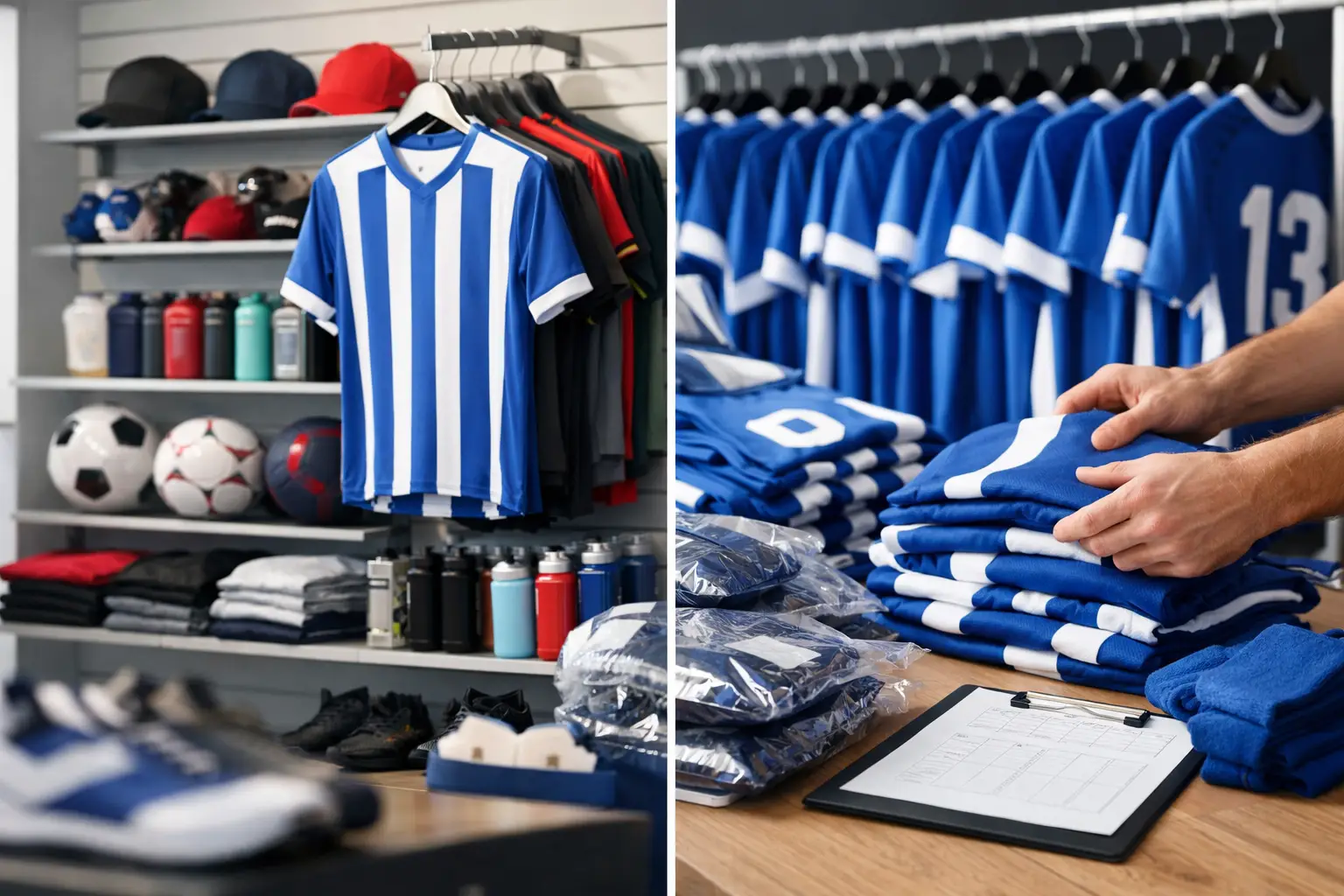
A team order is the traditional way many clubs buy kit and training wear. One person – usually a manager, coach, secretary or PE lead – gathers the requirements, submits one grouped order and then handles distribution when everything arrives. It works well when the whole squad needs the same items at the same time, such as a new match kit, pre-season training tops or coach jackets for staff.
A club shop works differently. Instead of one organiser collecting every detail, the club has a dedicated online space where players, parents and supporters can buy approved products directly. That could include matchday wear, training kit, accessories, bags, outerwear and club-branded merchandise. The big difference is that ordering becomes ongoing rather than tied to one deadline.
Neither model is right for every club in every situation. The best option depends on what you are buying, who is paying, how often items need replacing and how much admin your volunteers can realistically take on.
When a team order is the better option
There are times when a team order is still the most sensible route. If you need a full set of kits for a new squad, or you want every player to receive the same presentation bundle at the start of the season, one central order keeps things controlled. Sizes can be checked in one go, colours stay consistent across the group and the club can keep a clear view of budget before confirming anything.
This approach also suits purchases funded fully or partly by the club, sponsor or school. If the organisation is paying, it usually wants one invoice, one approval point and one delivery plan. That is far easier to manage through a team order than asking individuals to buy separately.
There is also a consistency benefit. A team order helps avoid situations where one player buys last year’s training top, another chooses a different quarter zip and a third orders a bench jacket in the wrong colour. For squads where appearance matters – especially on matchdays, presentations or school fixtures – central control can be a real advantage.
The trade-off is admin. Someone still has to gather names, sizes, initials, numbers and payment details if families are contributing. If one player joins late or loses a tracksuit top in October, the original team order no longer solves the problem.
When a club shop makes more sense
A club shop comes into its own when demand is spread across the season. That is common in grassroots football. Children grow, socks go missing, waterproofs wear out and new signings arrive after the initial order window has closed. A club shop gives people a simple way to top up what they need without sending the team manager back into ordering mode every few weeks.
It also works well for clubs with multiple teams. Once you have minis, juniors, youth and adult sides all needing different garments at different times, the admin on central orders can become hard to control. A dedicated shop keeps approved products in one place and lets each buyer sort their own order directly.
Supporter sales are another strong reason to use a club shop. Team orders are built around squads. Club shops can serve the wider club community, including parents, volunteers and supporters who want a hoodie, bobble hat, rain jacket or training tee without waiting for the next bulk order.
For many clubs, this is where the model really proves its value. It supports the playing side of the club but also helps the wider identity of the team. Everyone knows where to go for official gear, and the secretary is not stuck forwarding product photos and size charts every weekend.
The admin difference matters more than most clubs expect
On paper, both options are about buying kit. In practice, they are also about who does the work.
With a team order, the club carries most of the admin. Someone needs to collect choices, answer questions, chase responses, confirm customisation and often handle money. If there are twenty players, that is manageable. If there are ten teams and each family has a different question about sizes, it soon becomes a job rather than a task.
With a club shop, much of that burden shifts away from volunteers. Buyers can view the approved range themselves, choose their size and place orders when needed. That does not remove all responsibility from the club, because someone still needs to define the range and keep standards in place, but it cuts out a lot of repetitive day-to-day coordination.
For busy grassroots clubs, that is not a small detail. Most teams are run by people fitting football around work, family life and training nights. Any system that reduces back-and-forth without reducing control has a clear practical advantage.
Cost, control and flexibility in club shop vs team order
Cost is often the first concern, but it should not be the only one. A team order can be more efficient when everyone needs the same thing at the same time. It can simplify budgeting, especially if the club is buying in volume and planning for a full season rollout.
A club shop, though, can be better value over time because it reduces waste and avoids over-ordering. Clubs do not need to guess how many extra midlayers, rain jackets or training bottoms to hold just in case. Families and players buy what they need when they need it.
Control works differently in each model. Team orders give central control over every item in that specific purchase. Club shops give strategic control by limiting buyers to an approved product range. That is often a better fit for clubs that want consistency without micromanaging every single order.
Flexibility is where club shops usually pull ahead. Late joiners, replacement items, extra layers in winter and last-minute supporter gifts are all easier to manage through an always-available shop than through repeated manual order rounds.
Which suits schools and academies?
Schools and academies often need a mixed approach. A PE department may prefer a team order for staff kits, fixture wear or a set intake of players. That keeps uniform standards tight and fits internal purchasing processes.
At the same time, a club-shop style setup can be ideal for replacement items and optional extras. Parents can order approved garments directly without asking staff to run another collection process. For schools especially, that can remove a lot of friction from what should be a straightforward purchase.
Academies with larger player numbers may find the split even more useful. Core issued kit can stay on a team-order basis, while extras and top-ups sit in the shop. That gives the organisation control where it matters and flexibility where it helps.
The best answer for many clubs is both
This is where the club shop vs team order debate becomes more practical than ideological. Many football clubs do not need to choose one and reject the other. They need to use each method for the job it does best.
A team order is excellent for launches, squad-wide kit allocation, sponsor-backed packages and one-off coordinated purchases. A club shop is excellent for repeat buying, replacement items, multi-team access and supporter merchandise.
Used together, they solve different problems. The team order gets the season started properly. The club shop keeps it running smoothly once reality kicks in – players joining late, weather changing, stock needs shifting and parents asking for one more training top before Saturday.
For clubs trying to grow, this combined setup also looks more professional. It shows players and supporters that there is a clear route to official gear, while still giving club organisers proper control over identity, product choice and presentation.
How to decide what your club needs
Start with your current pain points rather than the platform itself. If your biggest issue is launching a full kit package for a squad, a team order may be the right first move. If your main problem is constant top-up requests, missing items and repeated admin, a club shop will probably deliver more day-to-day value.
It also helps to look at who buys most often. If nearly every purchase goes through one organiser, central ordering may still be workable. If parents, players and supporters regularly want their own items, direct ordering is usually the better fit.
Finally, think beyond August. The right system is not just the one that handles pre-season well. It is the one that still works in November when someone needs a replacement zip top, in January when the weather turns and in April when supporters want club gear for finals day.
For many grassroots teams, the smartest setup is the one that keeps volunteers free to coach, train, play and support the club instead of spending another evening sorting kit forms. That is usually a good sign you are buying the right way.
Share this post
Author







Leave a Reply