
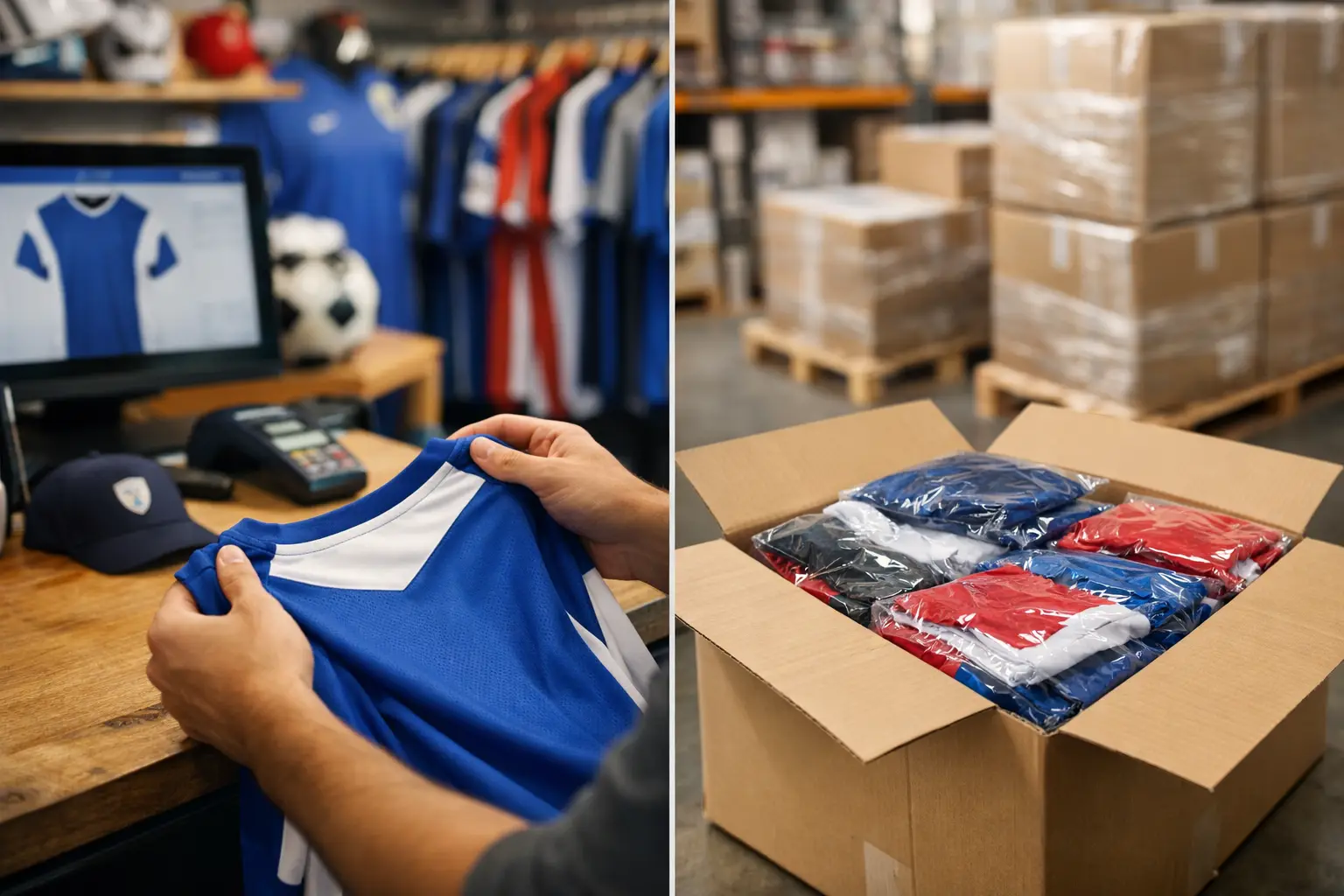
Club Shop Versus Bulk Ordering
A missing goalkeeper top on Friday night, three new signings on Sunday morning, and a parent asking where to buy a club rain jacket before the next away game – this is where club shop versus bulk ordering stops being a theory and becomes a real operational choice. For grassroots football, the right model can save time, reduce admin and make it easier to keep players, coaches and supporters properly kitted out across the season.
Some clubs still prefer to place one large order, tick it off, and move on. Others need a more flexible setup where people can buy what they need, when they need it. Neither route is automatically better. The best option depends on how your club runs, who is buying, and how often your requirements change.
Club shop versus bulk ordering: what is the difference?
Bulk ordering is the traditional approach. A club secretary, coach or team manager collects sizes, confirms quantities, agrees budgets and places one larger order for kits, training wear or equipment. This works well when the club knows exactly what it needs and wants to control the whole process from one central point.
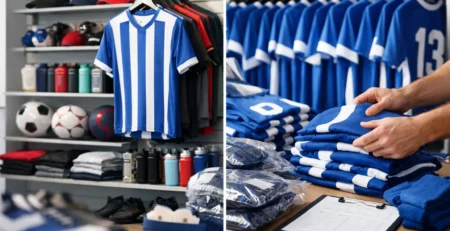
A club shop works differently. Instead of one person managing every purchase, the club has a dedicated online space where approved products are available to players, parents, coaches and supporters. That could include match kit, training kit, bags, outerwear, accessories and club merchandise. Individuals can order directly, which takes pressure off volunteers and gives the wider club community an easy way to buy official items.
The key difference is control versus flexibility. Bulk ordering keeps purchasing centralised. A club shop spreads access across the club while keeping products consistent and tied to the team identity.
When bulk ordering makes the most sense
Bulk ordering is often the strongest option at the start of a season or when launching a new kit cycle. If you are equipping a full squad, replacing matchday shirts across several age groups, or ordering a planned set of training wear for staff and players, buying in one go can be efficient.
It also suits clubs with fixed budgets. If a committee has approved spending for a set number of kits, tracksuits or match balls, a single order gives a clear cost upfront. That helps with planning and avoids the club carrying open-ended purchasing across the season.
There is also a practical point around consistency. When everyone is measured, approved and ordered together, you are less likely to end up with slight product variations or players turning up in different generations of the same item. For presentation, especially on matchdays, that matters.
But bulk ordering has limits. It relies on accurate forecasting. Sizes change, squads change, and items go missing. One order in June rarely covers everything that happens by February.
The strengths of bulk ordering
For many teams, the biggest benefit is simplicity at the point of purchase. One order, one approval process, one delivery plan. It can be easier to manage sponsor branding, player numbering and coordinated personalisation when everything is handled together.
Bulk ordering can also suit schools and academies with structured intake numbers. If your PE department or football programme knows exactly how many pupils need kit and when they need it, central purchasing remains a dependable route.
Where bulk ordering creates pressure
The pressure usually lands on one or two people. Somebody has to collect sizes, chase late replies, check customisation, take payments if the club is not funding everything, and deal with the complaints when one player wanted a medium rather than a small. That admin stack is familiar to anyone involved in grassroots sport.
There is also the issue of top-ups. Once the main order has landed, replacements and add-ons often turn into separate small requests. Those can become time-consuming quickly, especially if your club runs multiple teams.
Why club shops work well for modern grassroots clubs
A club shop suits clubs that need ongoing access rather than one-off supply. If players join mid-season, parents need replacement shorts, coaches want additional training wear, or supporters want club-branded products, a dedicated shop makes that far easier to manage.
Instead of the club acting as a middleman for every order, individuals can buy directly from the approved range. That reduces admin and gives the club a cleaner way to present official products. It also helps keep branding consistent, because people are choosing from the club’s selected items rather than sourcing similar-looking alternatives elsewhere.
For clubs with several squads, this model is especially useful. Junior sections, senior teams, coaches and supporters often need different products at different times. A club shop handles that ongoing demand without requiring a fresh club-wide order every few weeks.
The value of year-round access
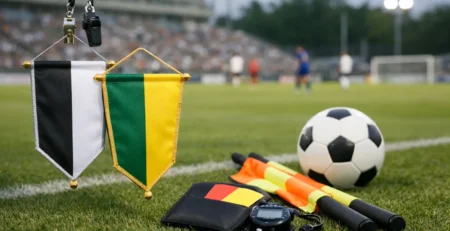
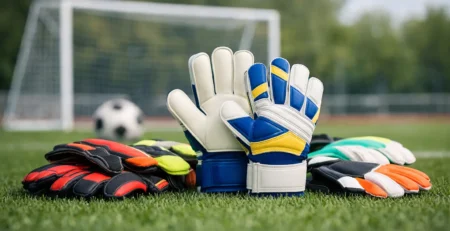
Football clubs do not buy in one neat annual block. The season creates constant demand. New players register. Goalkeepers need extra kit. Winter brings a rush for layers and jackets. End-of-season events create interest in trophies, pennants and presentation items.
A club shop supports that reality. It allows a club to keep supply live rather than restarting the process every time a need appears. For busy volunteers, that matters as much as price.
Supporters and parents matter too
One of the big differences in club shop versus bulk ordering is who gets included. Bulk orders are usually focused on the squad. Club shops open the door to the wider club network. Parents can buy rain jackets, training tops or accessories. Supporters can pick up official merchandise. Coaches can add staff wear without waiting for the next coordinated order.
That wider access strengthens club identity. It also makes the club feel more joined up, particularly for community teams where matchday support, fundraising and local visibility all matter.
Club shop versus bulk ordering on cost
Cost is where many clubs pause, and rightly so. Bulk ordering can look more attractive if you are purchasing large volumes at once and want to lock everything into a defined budget. It may also reduce repeated admin time if your needs are stable and predictable.
A club shop, though, can lower hidden costs. It reduces volunteer hours spent collecting orders. It cuts down on cash handling and chasing payments. It limits the problem of over-ordering items that sit unused in a cupboard. And because individuals can buy when needed, the club does not always have to fund every replacement upfront.
The real question is not simply which route is cheaper on paper. It is which route costs your club less time, less confusion and fewer ordering mistakes across a full season.
Choosing the right model for your club
If your club runs one or two stable teams, bulk ordering may still be the cleanest option for core match kit. If you run several age groups, expect regular player changes, or want supporters and parents to access official gear easily, a club shop is often the more practical long-term model.
For many organisations, the answer is not one or the other. It is both.
The hybrid model often works best
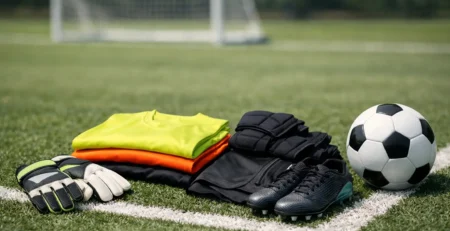
A lot of grassroots clubs get the best results by splitting their buying into two parts. Bulk ordering covers the essentials such as squad match kits, staff wear and pre-season training kit. The club shop then handles top-ups, replacements, added layers, bags, accessories and supporter merchandise.
That approach gives the club control where it matters most, while keeping flexibility for everything that changes during the season. It is a sensible setup for clubs that want to stay organised without putting every order through one volunteer.
This is where a specialist supplier can make a real difference. Football Stuff is built around that mix of official club access, recognised teamwear brands and easy repeat purchasing, which suits how grassroots clubs actually operate.
Questions worth asking before you decide
Before choosing between a club shop and bulk ordering, look at how your club functions week to week. Who currently manages kit? How often do you need replacements? Are parents regularly asking where to buy approved items? Do you want to give supporters access to official merchandise? Are your squads stable, or do they change throughout the season?
If the current setup depends on one overworked volunteer, a club shop can remove a lot of friction. If your requirements are tightly controlled and happen at set times, bulk ordering may still be the right call for core teamwear.
The best system is the one your club can actually maintain. Good ordering is not just about getting shirts delivered. It is about making sure players are ready, staff are organised and the wider club can buy with confidence when needed.
A football club runs better when kit supply matches the reality of the season, not an ideal version of it. Choose the model that keeps your teams prepared, your admin lighter and your club looking the part from first whistle to last.
Share this post
Author




Leave a Reply