
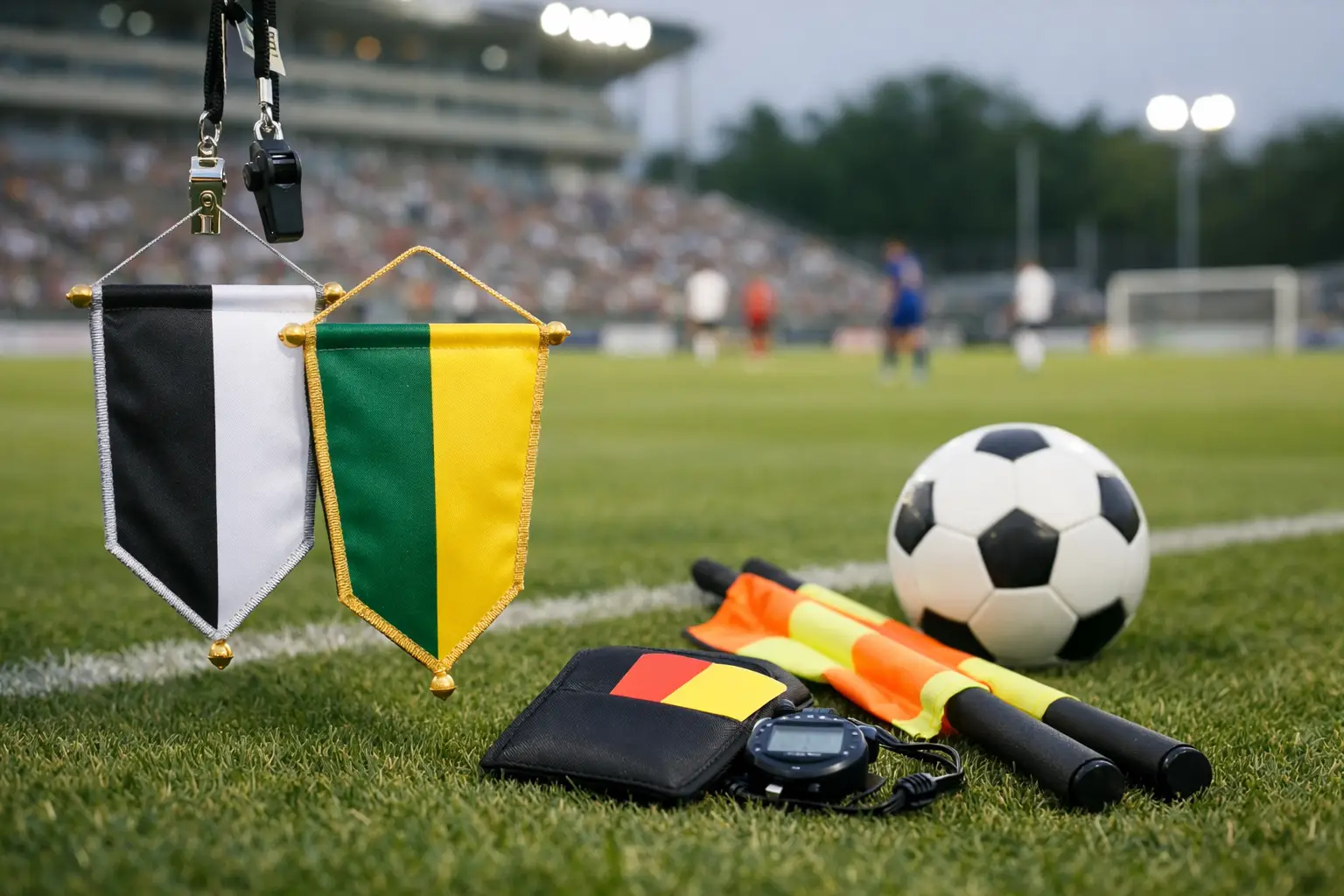
Referee Pennants for Football Clubs
A cup final, county fixture or academy tournament can be organised down to the last cone and corner flag, but small presentation details still shape the impression your club leaves. Referee pennants for football clubs are one of those details. They give match officials something appropriate to present before kick-off, help clubs look prepared on the day and add a level of professionalism that matters at every standard of the game.
For grassroots teams, schools and local clubs, that matters more than people sometimes expect. Matchday is not only about the ninety minutes. It is also about how a club presents itself to opponents, officials, parents, committee members and visiting guests. A well-made pennant can play a simple but useful role in that wider picture.
Why referee pennants still matter on matchday
Pennants are not just ceremonial extras for senior clubs. At grassroots level, they often serve a practical purpose. When a club hosts a cup tie, welcomes a touring side or takes part in a special fixture, a pennant gives the referee team a formal token linked to the occasion. It shows respect for the officials and helps the home club look organised.
That can be especially useful for clubs trying to build a stronger identity. Junior sides moving into competitive leagues, schools hosting inter-school football or community clubs running presentation weekends all benefit from details that make the event feel properly staged. The pennant itself may be a modest item, but it supports a bigger message – this club takes football seriously.
There is also a branding benefit. A pennant carrying club colours, crest and wording is instantly recognisable. For clubs that work hard on teamwear, training kit and supporter gear, it makes sense to carry that same identity into matchday presentation items as well.
Choosing referee pennants for football clubs
Not every club needs the same type of pennant. A Sunday side that only occasionally hosts special fixtures will look at the product differently from an academy, school or established local club with regular cup matches and visiting teams. The right choice usually comes down to frequency of use, presentation standards and how visible club branding needs to be.
Size and presentation
The first thing to consider is how the pennant will be used. If it is mainly for pre-match exchange with officials at occasional fixtures, a standard presentation size usually does the job. It should be large enough to display the club crest and colours clearly without feeling oversized or awkward to carry.
If the pennant is intended for more formal events, such as tournament finals or club anniversaries, presentation carries more weight. In those cases, clubs often want a cleaner finish, sharper print and a style that looks good in photographs. It depends on the setting. What works for a regular league fixture may not feel right for a memorial game or presentation event.
Club colours and crest clarity
A pennant only works if people can tell which club it represents. Strong colour contrast, a clear crest and legible text matter more than overcomplicated design. It is tempting to include too much detail, especially when a club has sponsors, long team names or anniversary messaging, but crowded designs rarely look as smart in person.
Simple branding often has the stronger result. Club crest, team name and core colours are usually enough. If extra wording is needed, such as the name of a tournament or commemorative fixture, it needs space to remain readable.
Build quality and durability
Grassroots buyers are usually practical buyers. They do not want presentation items that look tired after one use or lose shape in storage. Material quality, stitching and finish all affect whether the pennant still looks presentable next season.
This is where paying attention to durability makes sense. If your club stores pennants with trophies, kit bags and matchday equipment, they need to stand up to handling and transport. A cheaper option can be fine for one-off use, but if the pennant is expected to support regular fixtures and repeated presentation duties, a better-made product is usually worth it.
When football clubs use referee pennants
Some clubs only think about pennants when a final appears in the diary, but they have a broader use than that. Cup matches are the obvious occasion. They also fit county games, school fixtures, academy friendlies, touring visits and testimonial events.
For clubs running multiple teams, pennants can help standardise matchday presentation across age groups and competitions. That is useful for clubs trying to present a consistent image. If your first team, youth section and academy all represent the same badge, a coordinated approach to matchday items helps reinforce that.
They are also useful for tournaments. If your club hosts visiting teams and several referee appointments across a weekend, having properly branded pennants available keeps things organised and avoids a last-minute rush for presentation items. It may seem minor until the schedule tightens and someone realises there is nothing suitable to hand over before kick-off.
A small item that supports a bigger club image
Most grassroots clubs work hard to be seen as reliable and well run. That is important when attracting players, volunteers, sponsors and even new committee members. Referee pennants support that image in a quiet but effective way.
When officials arrive at a ground and the club has matchday details covered, it creates confidence. The same applies to visiting teams. People notice when the club badge is presented properly, when colours match across equipment and when the event feels thought through. Those impressions are built from several small details rather than one big gesture.
This is especially relevant for clubs that already invest in club shops, branded teamwear and custom training kit. If your club values consistency, presentation items should not be an afterthought. They do not need to be extravagant, but they should look like they belong to the same club identity.
Ordering the right quantity without overspending
One of the common trade-offs is quantity. Some clubs buy too few and end up short during busy periods. Others order more than they realistically need and tie up budget that could have gone on balls, bibs or replacement kit.
The sensible approach is to match the order to your fixture calendar. Think about how many special matches, tournament dates or formal presentations your club usually handles in a season. A club secretary or team manager will often have the clearest view of this because they deal with appointments, visiting teams and event planning.
There is also a difference between buying for a single squad and buying for the whole club. A first team may only need a small quantity, while a large community club with youth, girls and adult sections may benefit from holding a modest stock centrally. That reduces repeat ordering pressure and helps teams stay ready for short-notice fixtures.
Customisation and what to include
Customisation is where clubs can either get it right quickly or overcomplicate the process. In most cases, less is more. The club crest should lead the design, supported by club name and colours. If the pennant is for general club use, that will usually be enough.
Specific event text can work well when the fixture has a clear significance, such as a final, anniversary game or memorial match. The trade-off is flexibility. A general club pennant can be used all season, while an event-specific version may only suit one date.
That is why some clubs mix both. They keep a stock of standard referee pennants for football clubs and order bespoke versions only when a major fixture justifies it. For budget-conscious teams, that is often the most practical route.
Why buying from a football specialist helps
Referee pennants sit in a wider club supply picture. The buyer sourcing presentation items is often the same person ordering kits, match balls, training wear or team accessories. When those purchases are split across too many suppliers, admin becomes harder than it needs to be.
Using a football specialist helps keep things simple. Clubs can source matchday items alongside the rest of their football equipment, which saves time and makes repeat ordering easier. For teams juggling player registrations, fixture changes, budget approvals and parent communication, convenience is not a luxury. It is part of getting the season run properly.
That is one reason clubs, schools and community teams often prefer a supplier that understands the rhythm of football purchasing rather than treating pennants as a generic promotional item. Football Stuff fits naturally into that process because the wider product range supports the same buyer needs across kits, equipment and club presentation.
Getting more value from a simple matchday product
The best referee pennants do not need to be flashy. They need to be clear, presentable and appropriate to the standard of fixture. For some clubs, that means a dependable general-use pennant kept ready in the clubhouse or kit room. For others, it means a more polished custom item reserved for showcase matches.
What matters is whether the product supports the way your club operates. If it saves a scramble before a cup tie, helps officials feel properly welcomed and reinforces your badge on matchday, it is doing its job well.
A well-run club is often recognised in the details, and a smart pennant is one of the easiest details to get right.
Share this post
Author











Leave a Reply