
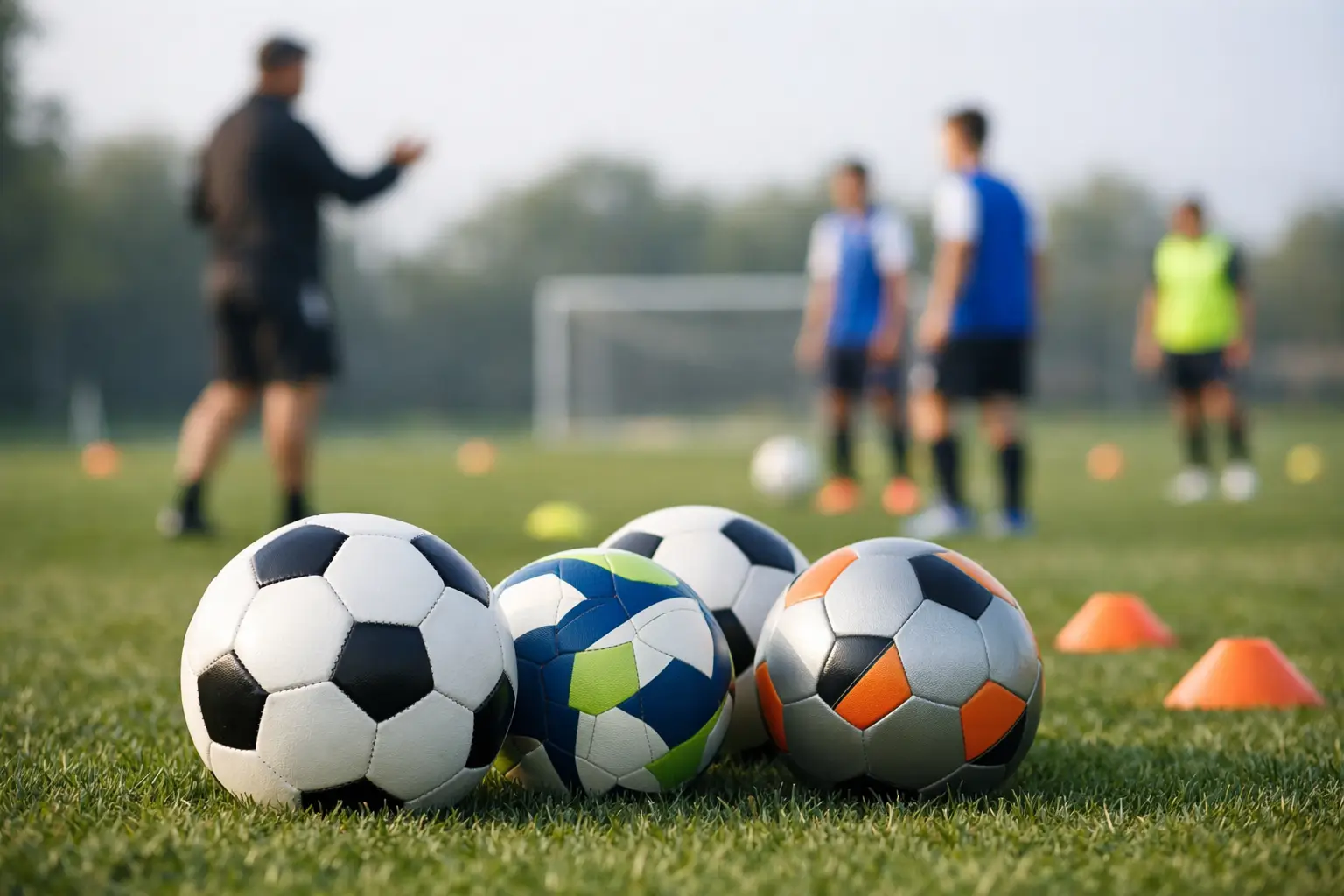
Choosing footballs for training sessions
A bag of worn-out balls can slow a session down faster than any late arrival. If you are buying footballs for training sessions, the right choice is not just about price – it affects drill quality, ball retention, confidence on the ball and how often you need to replace stock through the season.
For clubs, schools and grassroots coaches, training balls need to do a different job from match balls. They are kicked more often, used across more varied drills and shared by larger groups. That means durability, consistency and value usually matter more than premium matchday feel. The best option is the one that stands up to regular use, suits the age group and works on the surfaces your players actually train on.
What footballs for training sessions need to deliver
A training ball has to cope with repetition. Passing patterns, shooting circuits, possession drills and warm-ups all put strain on the outer casing, stitching and bladder. If the ball loses pressure too quickly or starts to feel uneven after a few weeks, the session suffers. Players notice it straight away, especially in technical work.
That is why coaches tend to look for a reliable balance. You want a ball that feels good enough for realistic practice, but tough enough to take heavy weekly use. In most grassroots settings, that means machine-stitched or hybrid designs are often the sensible middle ground. They usually offer better longevity than the cheapest entry-level options without pushing you into match-ball pricing.
It also helps to think about volume. A squad session rarely runs well with only a handful of balls. If you are constantly stopping to retrieve stray shots, intensity drops. Buying enough footballs matters just as much as buying the right type.
Size matters more than many buyers think
One of the most common mistakes is using the wrong ball size for the age group. It seems minor, but it changes how players strike the ball, receive it and build technique. Younger players training with a ball that is too large often develop poor habits because they adjust their touch and striking action just to cope with the weight and size.
For most junior age groups, you should follow the standard size guidance used in organised football. Size 3 is typically right for younger children, size 4 for older juniors, and size 5 for youth and adult football. If you are ordering for a school or club with several age bands, splitting your stock correctly is far better than trying to make one size work for everyone.
There is also a practical point for coaches running mixed sessions. If players are transitioning into the next age category, training with the correct upcoming size can help, but that should be a deliberate choice rather than an accident caused by limited stock.
Training surface changes what you should buy
Not every ball suits every venue. Grass, 3G, hard ground and indoor sports halls all create different wear patterns. A ball that performs well on a well-kept grass pitch may scuff quickly on abrasive artificial surfaces. Equally, a ball intended for outdoor use may feel too lively or too hard in a smaller indoor setting.
If your team mostly trains on 3G, durability on synthetic turf should move up the list. The outer material needs to handle regular friction and repeated impact. For clubs rotating between grass and artificial surfaces, a hard-wearing all-round training ball is often the safest choice.
Schools and community teams also need to factor in winter reality. Waterlogged grass, colder evenings and rougher surfaces all put training equipment under pressure. In those conditions, paying a little more for a better-made ball can save money over time because replacement cycles become less frequent.
Durability versus feel – where to draw the line
There is always a trade-off between a softer, more match-like feel and maximum durability. Premium balls can offer cleaner contact and more consistent flight, but if they are being hammered into fences and used across multiple age groups every night, they may not be the most practical training option.
For most grassroots buyers, the smart approach is to separate needs. Use dependable training balls for the bulk of weekly sessions, then keep a smaller number of higher-spec balls for finishing drills, shape work or pre-match preparation. That gives players exposure to a better feel without putting your full equipment budget into balls that will take a heavy beating.
If you are buying for younger teams, durability often wins outright. Junior sessions are busy, energetic and not always kind to equipment. A ball that keeps its shape and pressure is usually more valuable than one that claims elite-level performance but needs replacing too soon.
How many footballs should a team have?
This depends on squad size, session structure and whether you share stock between teams, but most coaches benefit from having more balls than they think they need. For technical work, small group drills and quick restarts, a healthy supply keeps players active and reduces dead time.
A senior squad can easily justify a full bag for every session, especially if the training plan includes shooting, crossing and possession games running at the same time. Junior coaches working with large groups or school classes may need even more, because spread-out sessions usually mean more balls out of play.
It is also worth planning for loss and wear. Balls get left behind, punctured or become unsuitable after long use. Buying right on the minimum can create a problem within weeks. A little spare capacity helps you stay organised through the season.
What clubs, schools and academies should look for
If you are buying on behalf of an organisation rather than as an individual coach, consistency matters. Mixed stock from different ranges can make sessions awkward, with players working using balls that vary in flight, bounce and feel. Keeping training balls as uniform as possible makes drills cleaner and stock management simpler.
That is especially important for schools and academies, where multiple staff members may access the same equipment. Clear sizing, dependable construction and easy repeat ordering all matter. If one batch performs well, being able to top up with the same product saves time and avoids unnecessary guesswork later in the term.
This is where specialist football retailers can make life easier. Instead of piecing orders together from general sports suppliers, clubs can source football-specific training equipment with the needs of squads and PE departments in mind. For many buyers, convenience is part of value.
Getting better value without buying the cheapest ball
Going straight to the lowest price point can be expensive in the long run. Very cheap balls often lose shape more quickly, hold air less effectively and need replacing sooner. They may look like a saving when you place the order, but they can create frustration by mid-season.
Better value usually comes from buying footballs that match your level of use. If a ball will be used three or four times a week by a full squad on 3G, it needs to be built for that workload. If it is for occasional school sessions on grass, you may not need the same level of spec.
Bulk buying can help, especially for clubs with several teams or schools equipping multiple year groups. It gives you a more consistent stockholding and reduces the rush to replace individual balls one at a time. Football Stuff serves exactly that kind of practical buying need, where organised teams want dependable gear without overcomplicating the process.
Signs you are buying the wrong training ball
If sessions keep stopping because balls are under-inflated, if the outer surface is wearing away unusually fast, or if players are regularly commenting that balls feel different from one drill to the next, your current setup may not be fit for purpose. These are not small annoyances. They affect tempo, quality and confidence.
Another warning sign is when coaches start protecting certain balls and avoiding using them in normal drills. That usually means the stock mix is wrong. Training equipment should be ready for training. If a ball is too precious to use, it is probably better suited to match preparation than everyday work.
Likewise, if you are replacing stock several times a season, the issue may be specification rather than bad luck. Looking at surface use, age group and frequency of sessions often reveals why balls are not lasting.
Making the right choice for your team
The best footballs for training sessions are the ones that suit your players, your surfaces and your weekly workload. For most grassroots teams, that means choosing reliable training balls in the correct size, with durable construction and enough stock to keep sessions flowing properly.
There is no single perfect ball for every setup. A junior school team training once a week has different needs from an academy squad on 3G four nights running. The key is being honest about how the balls will be used, then buying accordingly rather than being swayed by match-ball marketing.
Get that decision right and training becomes easier to run. Players get more touches, coaches spend less time managing equipment problems, and the club avoids repeated replacement costs. Good sessions depend on good habits, and that includes the gear you put into the bag before the first whistle goes.
Share this post
Author




Leave a Reply